Past Feels Safer Than the Future: The Rise of Retro-Authoritarian Nostalgia
- futureofromania
- Feb 14
- 8 min read
Updated: May 12
Why the Trend Is Emerging: Manufactured Memory in an Age of Instability
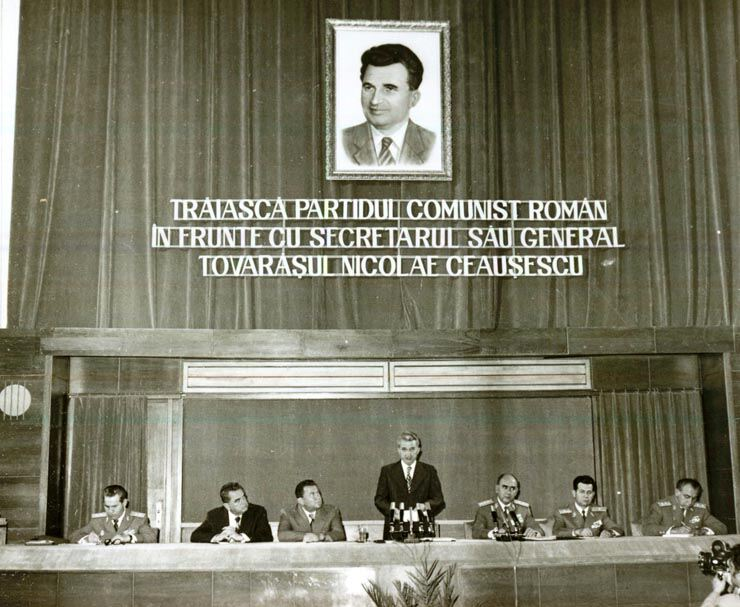
Romania is witnessing a cultural moment where nostalgia is no longer limited to aesthetics or pop culture but extends into political imagination, as 4 in 10 Romanians declare they would hypothetically vote for Nicolae Ceaușescu, signaling not a literal desire to restore dictatorship but a psychological search for perceived certainty in a context marked by economic volatility, geopolitical anxiety, and institutional distrust.
• What the trend is: A rise in nostalgic sympathy toward authoritarian leadership, particularly among generations who did not fully experience the communist regime.
• Why it’s emerging now: Prolonged uncertainty, economic pressure, and social fragmentation are creating emotional fatigue, making simplified historical narratives feel safer than complex democratic realities.
• What pressure triggered it: Ongoing instability, perceived governance inefficiency, exposure to polarized media narratives, and lack of long-term structural confidence.
• What old logic is breaking: The assumption that lived historical trauma permanently immunizes societies against authoritarian romanticization.
• What replaces it culturally: A curated nostalgia where memory is aestheticized and stripped of hardship, transforming authoritarianism into a symbol of order rather than oppression.
• Implications for industry: Brands and media platforms must navigate a society increasingly receptive to simplified, certainty-driven messaging without amplifying polarizing rhetoric.
• Implications for consumers: Younger generations reinterpret history symbolically rather than experientially, using it as a psychological anchor rather than a political blueprint.
• Implications for media industry: Algorithm-driven ecosystems may unintentionally amplify emotionally charged, nostalgia-driven content that reinforces idealized past narratives.
Insights: The growth of authoritarian nostalgia in Romania is less about ideology and more about emotional regulation, as younger and middle generations who did not directly endure systemic repression reinterpret the communist period as a metaphor for stability, revealing how uncertainty reshapes collective memory into a coping mechanism rather than a historical assessment.
Industry Insight: Companies operating in volatile markets must recognize that stability messaging now carries symbolic weight beyond economics, intersecting with deeper cultural longings for order and clarity. Audience Insight: Younger cohorts, particularly Millennials and Gen Z, display higher nostalgic sympathy not because of lived experience but because of comparative insecurity in the present, reframing the past as emotionally coherent. Cultural / Brand Insight: Nostalgia is evolving from retro fashion into ideological aesthetic, where perceived decisiveness and authority are rebranded as competence in a fragmented social landscape.
This trend reflects not a regression to the past but a recalibration of collective imagination, where uncertainty magnifies selective memory and transforms authoritarian symbolism into a shorthand for predictability in a future that feels increasingly unstable.
Detailed Findings: Selective Memory as Emotional Infrastructure
The data reveals a paradoxical society where democratic life is normalized yet authoritarian nostalgia remains symbolically attractive, particularly among those who were children during the regime or born after 1989, suggesting that distance from lived hardship increases openness to simplified historical reinterpretation.
• Finding: 41% of respondents state they would hypothetically vote for Nicolae Ceaușescu, placing him above all post-1967 Romanian presidents in declared support.
• Market context: Support is stronger among individuals with lower formal education levels, rural populations, unemployed individuals, homemakers, and pensioners, yet remains consistently elevated across generations.
• What it brings new to the market: A generational inversion where those who did not directly experience systemic deprivation exhibit higher nostalgic sympathy than those who lived through it.
• What behavior is validated: Emotional simplification as coping strategy, where authoritarian leadership is associated with decisiveness, order, and clarity in contrast to perceived democratic fragmentation.
• Can it create habit and how: Yes, through repeated exposure to nostalgia-driven narratives across digital platforms that normalize idealized depictions of the past and reinforce emotionally coherent historical shortcuts.
• Implications for market and consumers: Brands operating in Romania must acknowledge rising receptivity to stability-centered narratives while carefully maintaining democratic and ethical positioning to avoid reputational polarization.
Signals: Structural Signals of Nostalgia Amplification
The increase in authoritarian sympathy does not occur in isolation but within a broader ecosystem of economic strain, institutional skepticism, and digital narrative loops that reward emotionally resonant simplifications.
• Media signal: High algorithmic visibility of emotionally charged content increases exposure to nostalgic storytelling and leader-centric authority archetypes.
• Cultural signal: Younger generations, particularly Millennials and Gen Z, demonstrate stronger sympathy levels than Generation X, indicating memory dilution over time.
• Audience / Behavioral signal: Supporters of Ceaușescu also show greater alignment with contemporary authoritarian figures such as Donald Trump and Vladimir Putin, reinforcing a broader attraction to perceived strongman leadership.
• Industry / Platform signal: Communities with reduced access to pluralistic information environments display higher susceptibility to certainty-driven messaging.
• Service signal: Trust remains highest toward stable, economically developed democracies such as Japan and Germany, revealing that admiration for authoritarian leaders coexists with symbolic trust in stable democratic systems.
Main findingAuthoritarian nostalgia functions as psychological refuge rather than political blueprint.
Insights: The Romanian case demonstrates that nostalgia increases when present instability amplifies perceived governance fragmentation, transforming authoritarian imagery into emotional shorthand for decisiveness, even while cognitive trust remains oriented toward stable democratic nations.
Industry Insight: Organizations must decode nostalgia not as ideological extremism but as a signal of unmet psychological needs for predictability and coherence. Audience Insight: Generational distance from lived hardship enables selective reinterpretation, where symbolic stability overrides historical memory. Cultural / Brand Insight: Stability has become a mythologized attribute, and leaders or brands embodying clarity, decisiveness, and structural confidence resonate disproportionately in fragmented environments.
The detailed landscape shows a society negotiating between democratic identity and emotional longing for order, where memory gaps and uncertainty converge to elevate symbolic authoritarianism without necessarily translating into systemic rejection of democratic structures.
Description of Consumers: The Stability-Seeking Nostalgics
Young and mid-age Romanians navigating adulthood in prolonged uncertainty, reconstructing the past as a symbol of order rather than a lived political system.
This consumer group is not driven by ideological extremism but by emotional recalibration, shaped by economic volatility, institutional inconsistency, global conflict exposure, and digital-era overstimulation, which together create a longing for simplified authority narratives that feel coherent and structurally firm compared to the ambiguity of contemporary democratic processes.
• Demographic profile: Millennials (30–45) and Gen Z (18–29) show the highest nostalgic sympathy levels, particularly those from semi-urban or rural environments and lower to mid education segments.
• Life stage: Early and mid-career individuals managing financial precarity, housing pressure, and long-term uncertainty without experiencing the constraints of the former regime firsthand.
• Shopping profile: Value-driven, promotion-sensitive, but psychologically responsive to brands that signal strength, reliability, and decisiveness.
• Media habits: Heavy digital consumption, algorithm-fed news exposure, fragmented information ecosystems, and frequent engagement with emotionally resonant content.
• Cultural / leisure behavior: Attraction to retro aesthetics, revival culture, nationalist symbolism, and simplified narratives of “how things used to be.”
• Lifestyle behavior: Risk-aware, future-anxious, economically cautious, yet emotionally attracted to symbols of firmness and order.
• Relationship to the trend: They reinterpret authoritarian leadership as a metaphor for stability rather than repression, using nostalgia as emotional scaffolding.
• How the trend changes consumer behavior: It increases receptivity to strong leadership archetypes, clarity-driven messaging, and brands that project confidence and structural control.
What Is Consumer Motivation: Certainty Over Complexity
In a landscape of institutional fatigue and social polarization, the primary motivational driver becomes psychological coherence, where consumers gravitate toward narratives that feel structured, decisive, and predictable, even if historically incomplete.
• Core consumer drive: To reduce ambiguity and regain a sense of structural predictability in daily life.
• Cognitive relief: Simplified leadership archetypes and nostalgic storytelling that compress complexity into emotionally digestible narratives.
• Social depth: Identification with communities that validate stability-oriented values and shared historical reinterpretations.
• Status through restraint: Valuing perceived discipline, order, and decisiveness over expressive or pluralistic identity markers.
• Emotional safety: Seeking symbolic authority figures or brands that project control and clarity amid fragmentation.
• Memory creation: Participating in retro cultural cues that aestheticize the past while selectively omitting its hardships.
Insights: The rise of nostalgic sympathy among younger cohorts reveals how historical distance combined with present instability transforms authoritarian memory into emotional currency, where certainty becomes aspirational and complexity becomes exhausting.
Industry Insight: Brands must understand that symbolic strength and decisiveness now carry psychological weight, but must deploy them without reinforcing divisive or exclusionary narratives. Audience Insight: Young adults raised in democratic Romania may romanticize authoritarian order precisely because they have only known instability within pluralistic systems. Cultural / Brand Insight: Nostalgia is evolving from decorative retro styling into ideological moodboard, where firmness, order, and decisiveness are culturally rebranded as competence.
This consumer profile reflects a generational negotiation between inherited democratic identity and self-constructed memory, where longing for stability reshapes perception more powerfully than direct historical experience.
Trends 2026: Nostalgia as a Stability Strategy
In 2026, nostalgia in Romania evolves from aesthetic revival into psychological infrastructure, becoming a mechanism through which younger generations process uncertainty, reinterpret authority, and construct emotional stability in a fragmented democratic landscape.
Main Trend: From Democratic Fatigue → To Symbolic Strongman Appeal
The behavioral pivot moves from pluralistic complexity toward symbolic decisiveness, where the appeal of authority is less about governance models and more about perceived coherence, order, and narrative clarity.
• Trend definition: A generational rise in authoritarian nostalgia driven by economic instability, institutional distrust, and lack of lived memory of systemic repression.
• Core elements: Selective historical reinterpretation, stability romanticization, authority archetype attraction, simplified leadership narratives.
• Primary industries impacted: Media, education, digital platforms, political communication, and brands leveraging retro symbolism.
• Strategic implications: Organizations must recognize the emotional logic behind nostalgia while maintaining ethical and democratic guardrails in communication strategies.
• Future projections: As long as instability persists, nostalgic sympathy will remain structurally embedded rather than episodic.
• Social trend implication: Public discourse may polarize between experiential memory holders and post-memory generations reconstructing history symbolically.
• Related Consumer Trends: Retro aesthetics revival, strong leadership admiration, distrust of institutional complexity.
• Related Industry Trends: Algorithmic amplification of emotionally resonant content, identity-based media clustering, rise of simplified narrative branding.
• Related Social Trends: Generational value divergence, memory dilution over time, increased psychological search for certainty.
Before synthesizing, it is important to note that four structural shifts define this trend: Selective Memory Construction, Authority Aestheticization, Certainty Seeking, and Democratic Fatigue, all intersecting to elevate nostalgia beyond decoration into ideological tone.
Trends 2026 — Strategic Synthesis Table
The dominant direction of this trend is symbolic stability, where nostalgia functions as emotional regulation rather than historical evaluation.
Trend | Trend Name | Description | Implication |
Main Cultural Trend | Selective Memory Construction | The past is reinterpreted through emotionally filtered narratives that prioritize order over hardship. | Institutions must invest in contextual education and nuanced storytelling to prevent oversimplification. |
Core Psychological Shift | Certainty Seeking | Consumers gravitate toward leaders and brands that project decisiveness and structural control. | Messaging must balance clarity and strength with inclusivity and ethical grounding. |
Media Ecosystem Trend | Authority Aestheticization | Authoritarian figures become symbolic icons of order amplified through digital platforms. | Platforms face responsibility to contextualize emotionally charged content. |
Social Dynamic | Democratic Fatigue | Complexity and pluralism feel exhausting compared to simplified authority narratives. | Civic communication must become clearer, more accessible, and emotionally resonant. |
Areas of Innovation: Designing for Democratic Stability
Innovation in 2026 will center on reinforcing trust, contextual literacy, and emotionally intelligent communication that addresses certainty-seeking without reinforcing authoritarian romanticization.
• Contextual Education Platforms: Digital tools that present historical nuance in accessible formats, bridging generational memory gaps.
• Narrative Balance Frameworks: Media systems integrating fact-check overlays, contextual storytelling layers, and historical perspective indicators.
• Emotionally Intelligent Communication: Brand and institutional messaging that acknowledges instability while reinforcing democratic competence and structural reliability.
• Community-Based Dialogue Models: Hybrid online-offline spaces fostering pluralistic discussion without polarization amplification.
• Algorithm Transparency Protocols: Platform-level clarity around recommendation systems to reduce emotionally manipulative amplification loops.
Insights: The rise of nostalgia-driven authority appeal in Romania signals not ideological radicalization but emotional recalibration, where stability, decisiveness, and coherence are psychologically elevated in response to sustained uncertainty and generational distance from lived authoritarian experience.
Industry Insight: Organizations that project calm competence without adopting exclusionary rhetoric will capture trust in certainty-seeking environments. Audience Insight: Younger generations romanticize stability because they lack direct experiential counter-memory, making emotional storytelling particularly influential. Cultural / Brand Insight: Nostalgia in 2026 becomes structural rather than stylistic, embedding itself into political imagination, media consumption, and symbolic leadership archetypes.
This transformation suggests a prolonged negotiation between memory and modernity, where the desire for order coexists with democratic identity, and where the brands and institutions that succeed will be those capable of delivering certainty without sacrificing pluralism.



Comments